Picking products is the decision that matters most in a dropshipping store. The right product almost sells itself; the wrong one burns your ad budget, piles up refunds, and has you quitting by month three.
The model itself doesn't change: you sell a product in your store, your supplier ships it straight to the customer, and you only pay for the goods after you've been paid. No inventory, no warehouse. What changes from year to year is which products work.
This guide gives you 100 dropshipping product ideas to sell in 2027, grouped into 10 categories, then the method to spot the next winners yourself and the criteria to tell whether an idea is worth it. Use the list as a starting point, whether you're building a one-product store or a niche store with a full catalog.
Dropshipping categories that hold up in 2027
Categories first, products second. The best ones aren't the ones that blow up on TikTok for ten days, but the ones people buy from all year, and again the next year:
- Beauty and personal care: consumables mean repeat purchases, and the audience is very active on social media.
- Pets: owners spend freely on their animals, and the community loves to share.
- Home and décor: a huge market driven by small "refresh my place" budgets.
- Kitchen: useful gadgets that demo perfectly in a 15-second video.
- Baby: parents pay for convenience and safety, and new customers arrive every day.
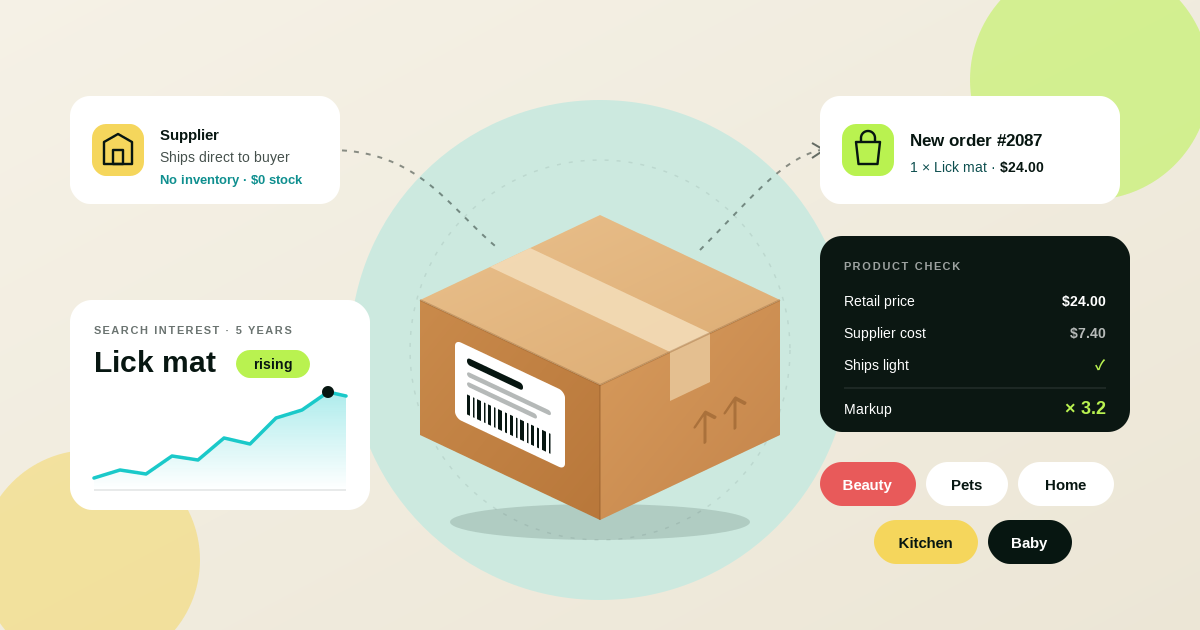
To check that a category is stable, open Google Trends, set the range to 5 years, and read the curve: a flat or rising line with regular seasonal peaks is a market. A single spike followed by a crash is a fad.
100 dropshipping product ideas to sell in 2027
- Apparel and fashion accessories
- Beauty and personal care
- Kitchen
- Baby and kids
- Pets
- Home and décor
- Office and remote work
- Fitness and wellness
- Phone and tech accessories
- Car and travel
1. Apparel and fashion accessories
Fashion is the biggest category in ecommerce and also the most crowded. To stand out, don't sell "clothes": sell a specific style to a specific community (athleisure, minimalist streetwear, modest fashion, hiking gear). Sizing is the category's weak spot, so publish a clear size guide to keep returns down.
If you'd rather sell your own designs than generic products, print on demand works on the same no-inventory principle and gives you a product nobody can copy.
Product ideas:
- High-waisted leggings
- Athleisure sets (sports bra + leggings)
- Oversized hoodies
- Embroidered caps
- Bucket hats
- Patterned socks
- Belt bags
- Canvas tote bags
- Polarized sunglasses
- Stainless steel jewelry (that doesn't tarnish)
2. Beauty and personal care
Beauty has two rare advantages: products that are light and cheap to ship, and repeat purchases. A customer happy with a serum comes back to reorder it. The category sells mostly on video: before/after, routines, honest tests.
Watch the regulations. In the US, cosmetics fall under FDA rules and claims under FTC rules; in the EU, cosmetics must comply with Regulation (EC) No 1223/2009, with a responsible person and compliant labeling. Work with suppliers who can provide that paperwork, and never promise medical effects.
Product ideas:
- Pimple patches
- Vitamin C serums
- Facial sunscreen
- Jade rollers and gua sha
- LED face masks
- Satin hair bonnets
- Detangling brushes
- Hair oils
- Gel manicure kits
- Lighted makeup mirrors
3. Kitchen
Kitchen products are made for short-form content: an everyday problem, a gadget, a 10-second demo. The best ones fix a real annoyance (chopping, storing, cleaning) rather than just being "fun".
Product ideas:
- Multi-function vegetable choppers
- Insulated water bottles
- Drawer and spice organizers
- Reusable air fryer liners
- Smart kitchen scales
- Electric milk frothers
- Stretch silicone lids
- Reusable freezer bags
- Antibacterial cutting boards
- Electric pepper grinders
4. Baby and kids
Parents buy a lot, and new parents enter the market every day. They happily pay for anything that saves time or gives peace of mind. The trade-off: safety is non-negotiable. In the US, children's products need a Children's Product Certificate under CPSC rules; in Europe, toys need CE marking under the Toy Safety Directive. Ask your supplier for the certificates.
Wooden and educational toys peak sharply from October to December, so set up your store in September.
Product ideas:
- Montessori wooden toys
- Play mats
- Star projector night lights
- Silicone bibs
- Suction plates
- Backpack diaper bags
- Baby sleep sacks
- Soft sensory books
- Video baby monitors
- Car seat organizers
5. Pets
Pet owners are one of the most engaged communities online. They treat their pet like family and share everything: a video of a dog discovering a new toy outperforms most ads. Skip food and supplements (heavy regulation) and focus on accessories.
Product ideas:
- Orthopedic dog beds
- Lick mats
- Slow feeder bowls
- No-pull harnesses
- Cat water fountains
- Self-cleaning slicker brushes
- Puzzle toys
- Compact cat trees
- Dog car seat covers
- Personalized ID tags
6. Home and décor
People redo their homes in small steps, mostly in January (new year) and summer (moving season). Winning products have an instant visual impact in a photo: what the customer sees in your video, they want in their home.
Product ideas:
- Machine-washable rugs
- LED strip lights
- Cordless bedside lamps
- Arched mirrors
- Essential oil diffusers
- Chunky knit throws
- Throw pillow covers
- Floating wall shelves
- Realistic faux plants
- Blackout curtains
7. Office and remote work
Remote work is here to stay, and plenty of people still work from a kitchen table. Anything that makes a small desk more comfortable or organized sells, with a clear peak at back-to-school in August and September.
Product ideas:
- Laptop stands
- Large desk mats
- Ergonomic footrests
- Lumbar support cushions
- Cable organizers
- LED desk lamps
- Planners and agendas
- Monitor risers
- Desktop whiteboards
- Productivity timers
8. Fitness and wellness
Wellness has moved from the gym to the living room: people train, recover and meditate at home. Compact, easy-to-store products win.
Product ideas:
- Resistance bands
- Foam rollers
- Massage guns
- Non-slip yoga mats
- Weighted jump ropes
- Time-marked water bottles
- Acupressure mats
- Adjustable dumbbells
- Balance boards
- Running belts
9. Phone and tech accessories
Everyone has a phone, and every new model creates fresh demand for cases and protection. The category competes hard on price, so stand out with design, quality or a niche (rugged cases for hikers, gear for content creators).
Product ideas:
- Designer phone cases
- Tempered glass screen protectors
- MagSafe mounts
- Compact power banks
- 3-in-1 wireless chargers
- Selfie ring lights
- Wireless lavalier mics
- Flexible tripods
- Waterproof phone pouches
- Braided charging cables
10. Car and travel
Drivers spend hours in their cars and want them more practical. Travelers buy before every trip, with peaks ahead of summer and the holidays.
Product ideas:
- Car phone mounts
- Trunk organizers
- Cordless car vacuums
- Windshield sunshades
- Packing cubes
- Memory foam travel pillows
- Hanging toiletry bags
- Universal travel adapters
- Smart luggage tags
- Wireless backup cameras
How to find the best dropshipping products
A list of ideas gives you a direction. To find your product, you need data. Here are the most useful tools, most of them free.
1. Google Trends
Google Trends shows how interest in a search changes over time. Compare several products, look at five years of history, and filter by country. You'll also see seasonality: no point launching sunshades in November.
2. Amazon Best Sellers
Amazon Best Sellers updates hourly, category by category. Also check "New Releases" and "Movers & Shakers": that's where products on the way up show first.
3. TikTok and Instagram
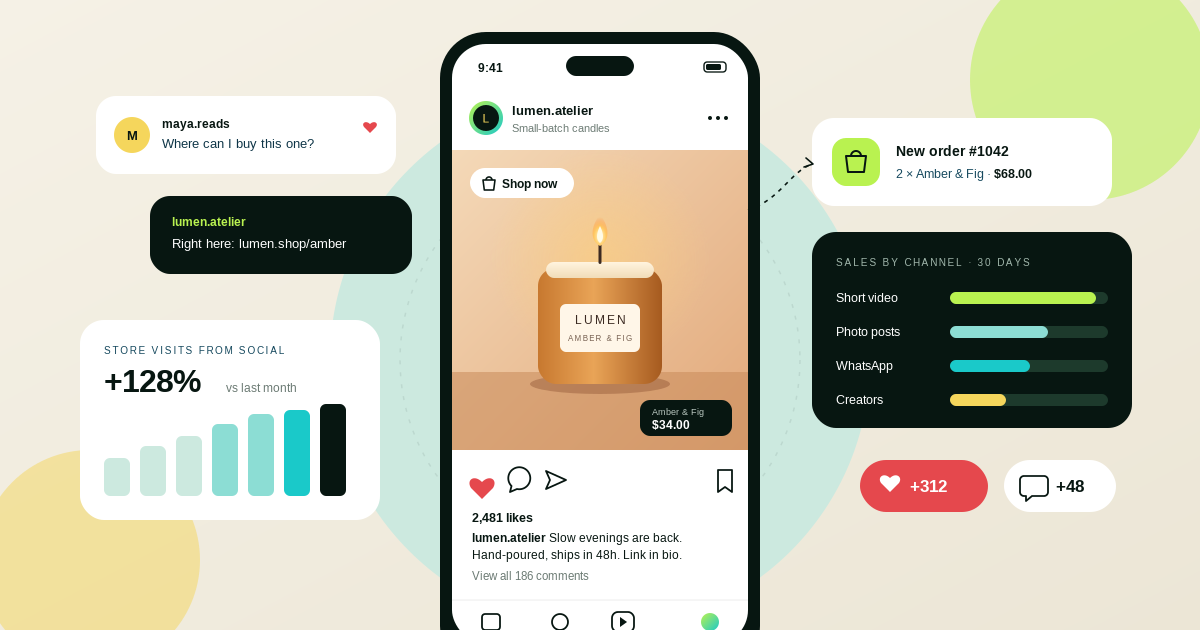
Search hashtags like #tiktokmademebuyit or #amazonfinds. Don't just count views: read the comments. "Where can I buy this?" and "link please" are worth more than a million passive views.
4. Your suppliers' catalogs
AliExpress, CJ Dropshipping and similar platforms show order counts and reviews. A product with lots of orders and good recent reviews is market-validated. It's also probably competitive, so your edge will come from your brand and your marketing.
5. Etsy and Pinterest
Etsy shows what people buy when they want something unique or personalized. Pinterest is an intent search engine: people pin what they plan to buy in the coming months.
6. Your own customers
Once your store is live, your best ideas come from your own data: on-site searches, support questions, products often bought together. A customer asking "do you have this in a bigger size?" just handed you your next product.
What makes a good dropshipping product?
Before adding a product to your store, run it through this checklist. If it ticks fewer than four of the six boxes, move on.
| Criterion | What to aim for | Why |
|---|---|---|
| Retail price | $20–60 | High enough for real margin, low enough for an impulse buy |
| Margin | Retail ≥ 2.5 × cost | You need to cover ads, payment fees and returns |
| Weight and size | Light, compact, not fragile | Cheaper shipping, fewer breakages |
| Visual potential | Understood in 3 seconds of video | That's what sells on social |
| Upsells | Accessories or refills available | Raises average order value |
| Hard to find locally | Not on the shelf at the corner store | Otherwise they'll just buy it there |
Price and margin
The classic trap: a product bought for $8 and sold for $15 looks profitable. Once you subtract ads, payment fees, a few refunds and support, nothing is left. Aim for products you can sell for at least 2.5× their landed cost.
Some brands enforce a minimum advertised price (MAP) on their resellers. Check before listing a branded product: selling below it can get you cut off by the supplier.
Marketing potential
Ask yourself: "Can I show this product working in 10 seconds?" A vegetable chopper, yes. A USB cable, no. Products with a visible "wow" or an obvious problem to solve cost far less to sell.
Upselling opportunities
A yoga mat calls for a strap, blocks and a bag. A dog bed calls for a spare cover. Pick products you can build bundles around: it's the easiest way to raise your average order without spending more on ads.
Repeat purchases
Products people buy once in a lifetime (a car vacuum) force you to keep finding new customers. Consumables (skincare, refills, accessories that wear out) bring the same customers back. A good store mixes both.
Is dropshipping still profitable in 2027?
Yes, but not the way it was in 2018. The "find a viral product, run ads, switch products next month" playbook is running out of steam: competitors copy everything within days, ad costs keep climbing, and shoppers have learned to distrust three-week delivery times.
What works in 2027:
- Quality first. Order a sample of every product before you sell it. A bad product costs you refunds, bad reviews and your store's credibility.
- Realistic delivery times. Favor suppliers with warehouses close to your customers (US, Europe), and show honest delivery estimates on your product page.
- A brand, not a product. A niche store with a name, a voice, good photos and a clear return policy is far harder to copy than a single product.
- A store you own. You control your prices, your product pages and your email list. If you're comparing platforms, our guide to Shopify alternatives in 2026 breaks down each one's fees.
- Content, not just ads. Short videos posted consistently reduce your dependence on paid ads. See how to use social media to grow your brand.
Found your product? Create your store for free → and sell dropshipping and print-on-demand products on the same platform, with no inventory and no code.
Frequently asked questions
What are the best products to dropship?
The most reliable ones sit in recurring-need categories: beauty and personal care, pet accessories, home and décor, kitchen, and baby products. A good product sells for $20–60, retails for at least 2.5× its cost, ships light, and is easy to demo on video.
How much does it cost to start a dropshipping store?
Since you don't buy inventory, startup costs are low: a platform subscription (often with a free trial), a domain name, a few product samples ($20–100), and an initial marketing budget if you want to run ads. You can start for under $200 by leaning on organic content.
How much can you make dropshipping?
It depends entirely on your margin, your customer acquisition cost, and how often customers come back. Many stores never get past a handful of sales; the ones that build a niche brand can become a real income. Work out your net margin per order before you spend on ads.
What mistakes should I avoid in dropshipping?
Selling a product you haven't tested, picking a product too cheap to cover ad costs, showing unrealistic delivery times, cloning a competitor's store, and relying on a single supplier. Those are the five most common reasons stores fail.
Do I need a business license to dropship?
Once you sell regularly, you need to register a business (in the US, a sole proprietorship or LLC depending on your state) and collect sales tax where required. Rules vary by country and state, so check with your local authorities.
Start your dropshipping store
The list above gives you 100 starting points. The rest comes down to execution: a tested product, a healthy margin, a store that earns trust, and content that shows the product in action. With Cartva, you build your store, add dropshipping products alongside your own print-on-demand designs, and start selling the same day.
Sources: Google Trends · Amazon Best Sellers · EU Regulation (EC) No 1223/2009 on cosmetic products · CPSC — Children's Product Certificate